Stick to Your Core. Compound on What Works.
A few months ago, I made a costly mistake.
Not because of the market, but because of myself.
When new trading regulations were introduced, I convinced myself that my old approach, the one I'd built, refined, and profited from for years, was now obsolete. SEBI had tightened rules around derivatives, increased lot sizes, and the trading community was buzzing with panic. Everyone on Twitter and Telegram was talking about pivoting, adapting, finding "the new way."
In reality, those regulations didn't stop me from trading my original way. My edge was in directional NIFTY futures, reading price action, waiting for setups, and taking high-conviction trades. None of that was affected by the new rules. But the noise got to me.
Shiny Object Syndrome Hit Hard
I fell for what I call Shiny Object Syndrome.
I saw traders posting about options selling strategies, iron condors, straddle adjustments, premium decay plays. The returns looked consistent, the drawdowns looked small, and the whole approach seemed "smarter" than sitting around waiting for a directional move. I thought, why not? Why sit through volatile swings when I could collect theta and sleep peacefully?
So I switched my system completely. Tried to reinvent my trading style overnight. New setups, new rules, new everything. I started selling strangles on NIFTY, managing Greeks I barely had intuition for, adjusting positions based on delta and vega movements that didn't come naturally to me.
The first couple of weeks went fine. Small, steady gains. I felt clever. I thought I'd cracked the code.
Then a gap-down happened. A big one. My directional instinct would have told me to stay flat or go short. But my new options positions were naked on the put side, and I froze. I didn't know how to adjust fast enough. I tried rolling, hedging, but everything I did felt reactive instead of proactive. The market moved 500 points against me in a single session and I was scrambling.
Result? A ₹50 Lakh drawdown.
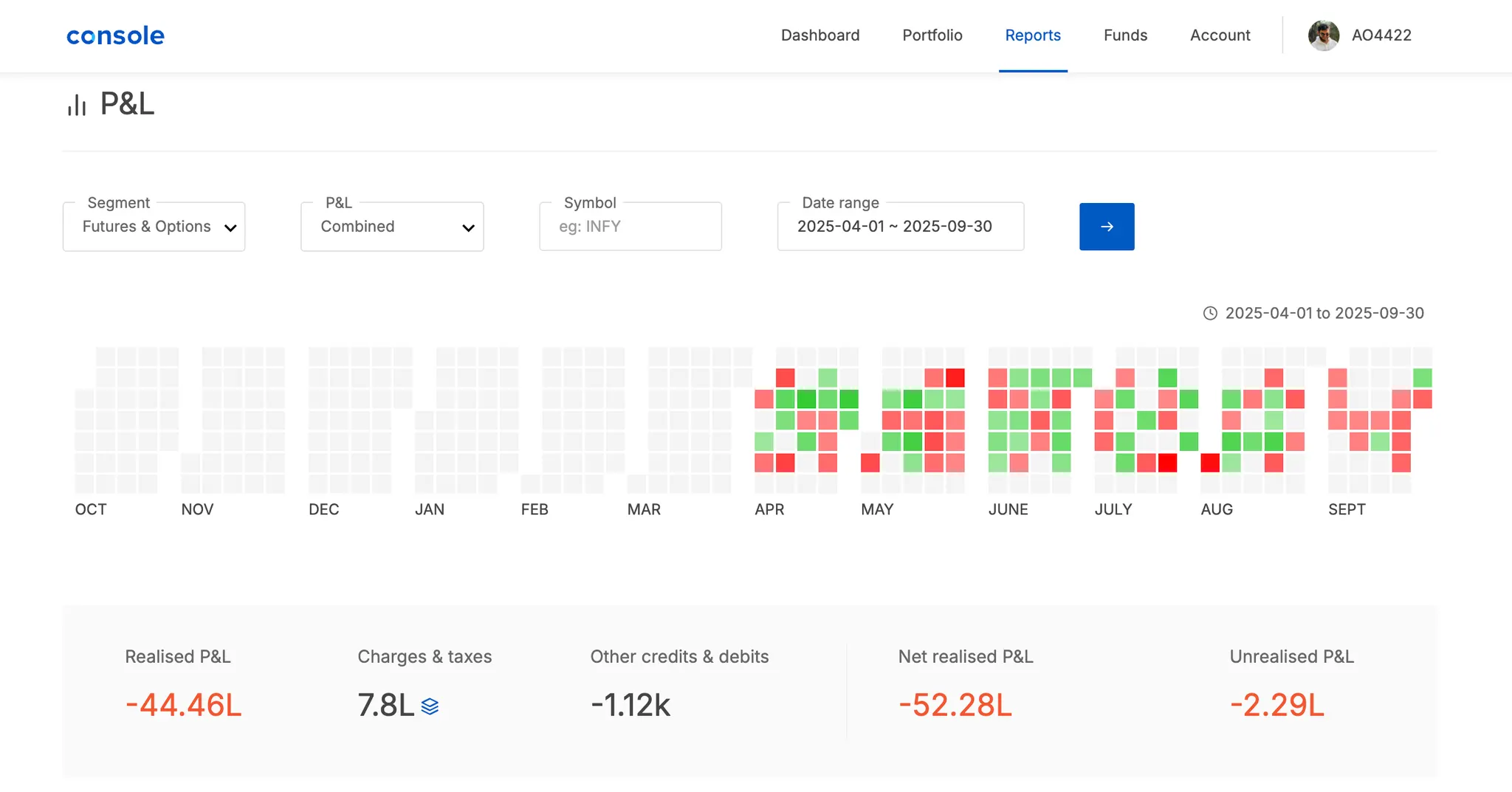
That number still stings to type. Fifty lakhs. Not because the market was irrational, but because I was trading a system I didn't understand deeply enough, in conditions I wasn't prepared for.
The Emotional Pit
The worst part wasn't the money. It was the self-doubt.
I'd spent years building confidence in my trading. I had a track record. I had proof that my system worked. And in a matter of weeks, I'd thrown all of that out the window chasing something that looked better from the outside.
There were mornings where I didn't want to open my terminal. I'd stare at the P&L and feel physically sick. The internal dialogue was brutal. "You knew better. Why did you switch? You got greedy. You got insecure." That voice doesn't stop just because you close the trading screen.
I also noticed how the drawdown started affecting other areas of my life. I was irritable, sleeping poorly, constantly checking my phone for global market cues. When your capital takes a hit like that, it's not just a financial loss. It sits on your chest.
The worst conversations were with myself. I'd look at my old equity curve, the one that had been steadily climbing for years, and see this ugly crater right in the middle. I knew exactly when it started and I knew exactly why. That's the part that's hard to forgive. If the market had just moved against a good trade, I could accept that. But this was self-inflicted. I did this to myself.
Coming Back to Core
Then I took a step back. Literally. I closed all my options positions, took a few days completely off the screen, and went back to my trading journal.
I read through months of old entries. The setups I'd taken, the reasoning, the outcomes. Page after page of evidence that my original system worked. Not perfectly, not every single trade, but consistently over time.
I realized nothing was wrong with my edge. I was the problem.
So I made a decision. Go back to basics. NIFTY futures, directional trades, high-conviction setups only. No more strangles, no more Greeks management, no more pretending I was someone I wasn't in the market.
I returned to my core, my original framework that had consistently compounded over time.
The first week back felt slow. I took only two trades. But they were my trades, setups I recognized in my bones. I knew exactly where my stop was, exactly what the target looked like, exactly how much I was risking. That clarity, that confidence, you can't fake it.
Within two months, I recovered the entire drawdown without taking on excessive risk, just by doing what I know best. No revenge trading, no doubling down, no heroic bets. Just my system, applied consistently.
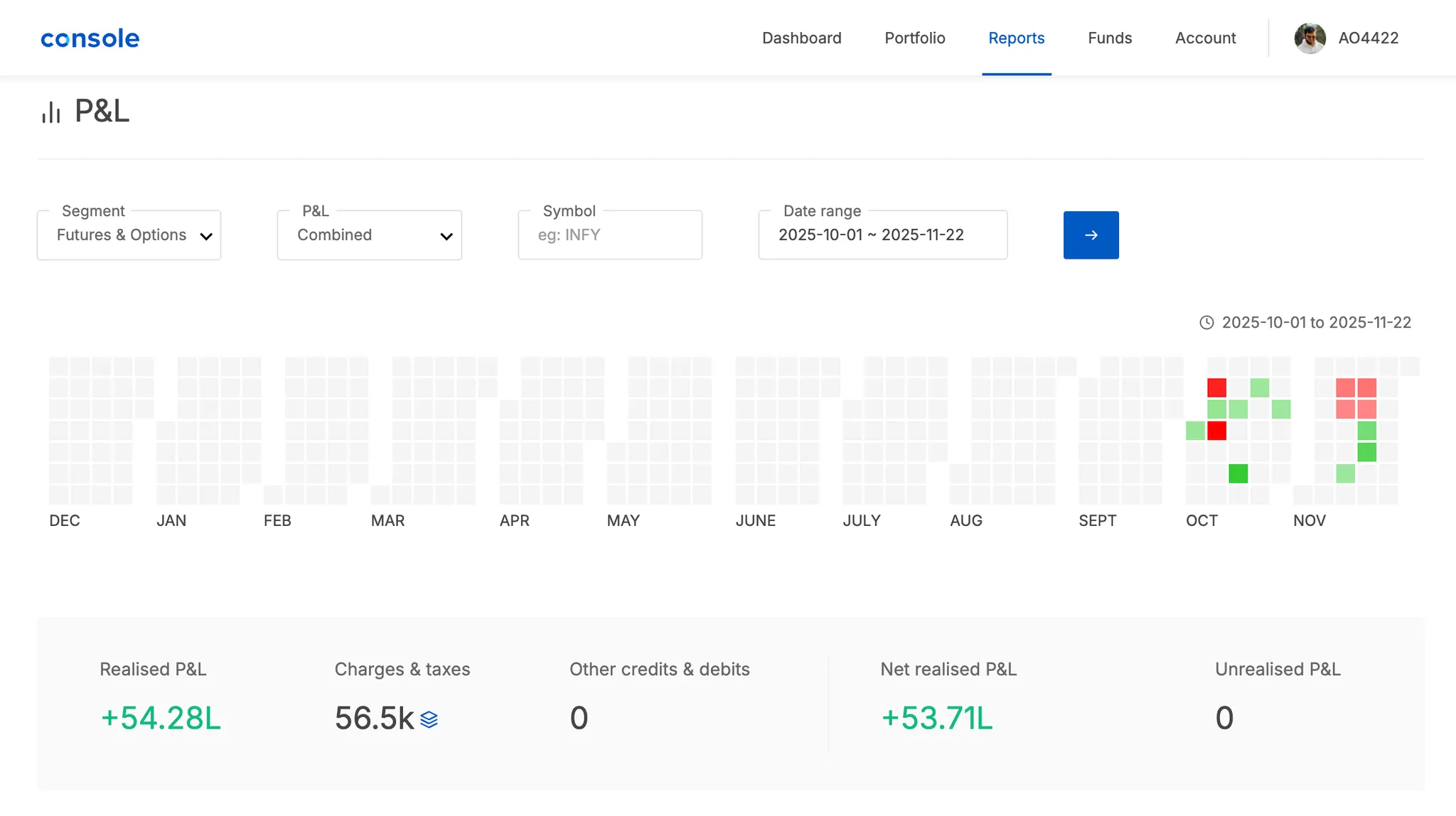
The Lessons That Stuck
Your edge is not transferable overnight. Just because options selling works for someone else doesn't mean it works for you. An edge isn't just a strategy, it's the years of pattern recognition, emotional calibration, and decision-making instinct you've built around that strategy. You can't download that for a different system in two weeks.
Noise is the enemy of conviction. When regulations changed, the trading community went into panic mode. People who'd never sold an option in their life were suddenly experts on theta decay. I let that noise override my own judgment. Never again.
Drawdowns from discipline breaks hurt differently. A 50L drawdown from a well-executed trade that just didn't work out? That's part of the game. A 50L drawdown from abandoning your system? That eats at you because you know it was avoidable.
Recovery comes from trust, not aggression. When I went back to my system, I didn't try to make the 50 lakhs back quickly. I traded my normal size, took my normal setups, and let the compounding do what it does. The recovery happened because I was patient, not because I was desperate.
Edge vs Novelty: Understanding the Difference
There's an important distinction between having an edge and chasing novelty. An edge is something you've tested, lived through drawdowns with, and still come out profitable on the other side. It's boring. It's repetitive. Some weeks it doesn't even produce a trade. But over 6 months, over a year, it puts money in your account.
Novelty is the opposite. It's exciting. It's new. It makes you feel like you're leveling up. But novelty without deep understanding is just gambling with extra steps. When I switched to options selling, I was attracted to the novelty, not the edge. I didn't have 1000 trades of experience with that system. I didn't know how it behaved in a flash crash, in a low-volatility grind, in an expiry week with unexpected news. I was flying blind and calling it "adapting."
The traders who last decades in this game are the ones who resist novelty at the core level. They might explore new ideas on the side, with small capital, over months of paper trading and small live trades. But their main account, their real capital, stays with what's proven.
For Traders Facing the Same Temptation
If you're reading this and you've been eyeing someone else's strategy, thinking it looks better than yours, let me save you some money.
Ask yourself honestly: do you have a system that works? Not one that wins every trade, but one that makes money over a meaningful sample size? If yes, your job isn't to find a new system. Your job is to go deeper into the one you have.
Trying new things is essential for growth, but not at the cost of abandoning what already works.
Experiment at the edges, not at the core. Allocate maybe 5-10% of your capital to learn something new. But your core capital, your bread and butter, that stays with the system you've proven.
Compounding doesn't come from chasing every new method or trend.
It comes from deepening your competence, not diversifying your confusion.
That 50L taught me more than any book or course ever could. I hope you don't need to pay that tuition yourself.